

Please click on the tables and figures to enlarge
When midazolam meets hyperactivity: tailoring dental sedation for patients with attention deficit hyperactivity disorder (ADHD)
*R L. Jones BDS (Hons), BSc (Hons), PGCert LTHE, FHEA
Foundation Dentist, University of Lancashire School of Medicine and Dentistry, 135A Adelphi Street. Preston PR1 7BH
*Correspondence to: Dr Rachel Jones
Email: rachelleah94@gmail.com
DOI: 10.63507/DKVP8973
Abstract
Attention deficit hyperactivity disorder (ADHD) is a common neurodevelopmental condition which has the potential to significantly impact upon multiple aspects of daily life, including oral health and access to dental care. Many of those with ADHD can experience behavioural challenges such as inattention, impulsivity and hyperactivity, which can make dental treatment difficult and stressful. In response, dentists can utilise conscious sedation to reduce anxiety, improve co-operation and enable effective and safe dental treatment. However, there is evidence that individuals with ADHD may react differently to sedation, particularly to agents like intravenous midazolam, presenting unique challenges for dental professionals responsible for their care. This paper explores the relationship between ADHD and dental sedation, suggesting reasons why sedation may be indicated for this population and how patients with ADHD may respond differently to sedative agents like midazolam. It concludes by investigating ways in which dental care could potentially be improved for this patient demographic.
Key learning points
- Patients with ADHD may respond unpredictably to intravenous midazolam, with the potential for delayed onset, prolonged recovery, or paradoxical reactions
- ADHD medication may alter midazolam’s sedative action, so careful multidisciplinary pre-sedation planning is key
- Optimal sedation for individuals with ADHD is achieved through tailored treatment, an accommodating environment, and a well-prepared and empathic clinical team.
ADHD and oral health
Attention deficit hyperactivity disorder, (ADHD) is a common neurodevelopmental disorder characterised by persistent patterns of inattention, impulsivity and hyperactivity.1 Living with ADHD presents a range of challenges for individuals and their families, affecting daily functioning, emotional regulation, task management, relationships, and employment, (see Fig. 1).
Currently in the UK, it is estimated that around 2.6 million people are diagnosed with ADHD, comprising approximately 1.9 million adults and 708,000 children.1 Although it is estimated there are many more people living with undiagnosed ADHD, the rates of diagnosis and prevalence of ADHD medication prescriptions have increased significantly over the past two decades.2
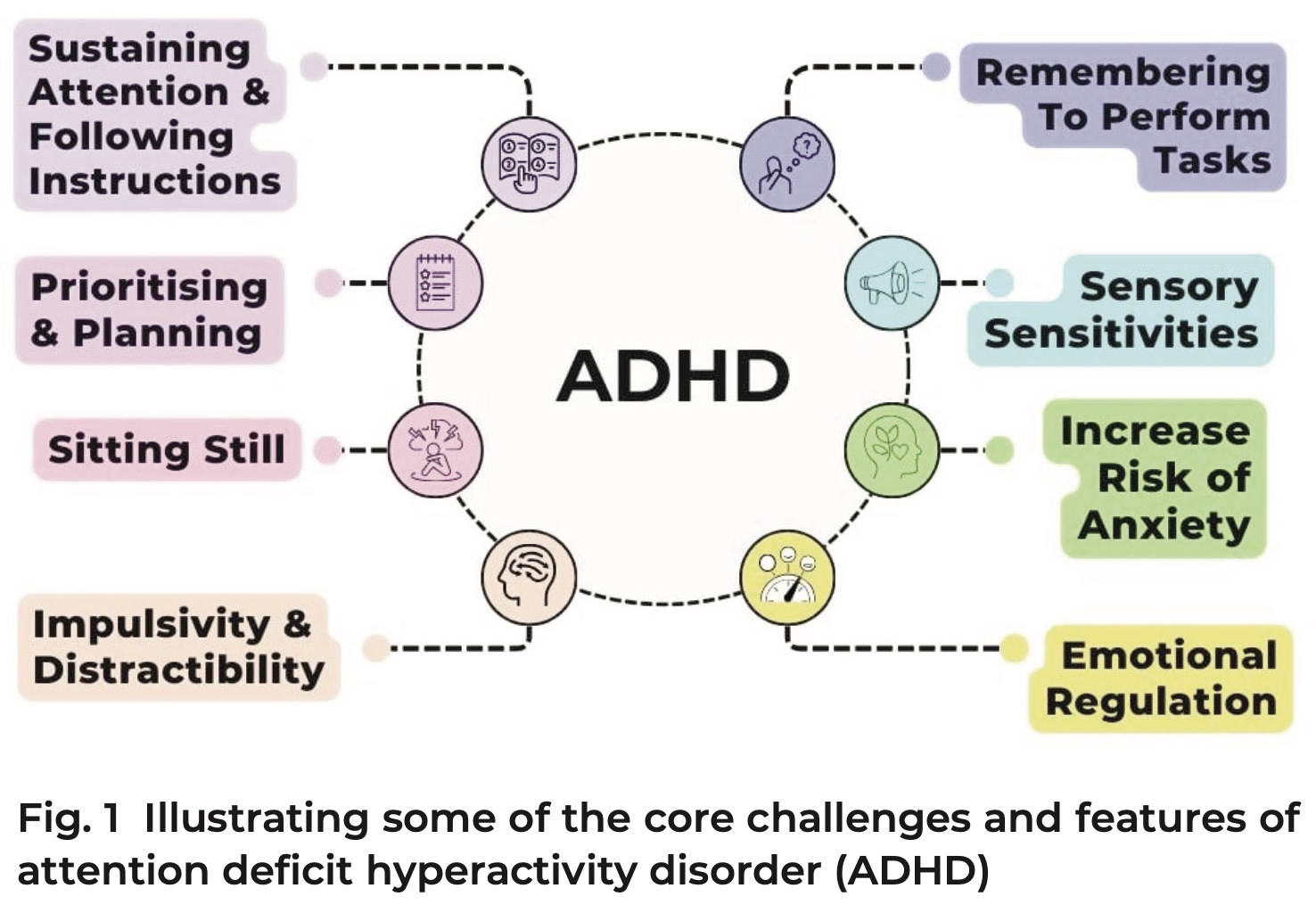
Historically often misunderstood, modern understanding of ADHD now identifies the link between dopamine and noradrenaline dysregulation in areas of the brain involved in executive functioning.3 The cause of ADHD is thought to be multifactorial, with current evidence suggesting a complex interaction between both genetic and environmental influences.4
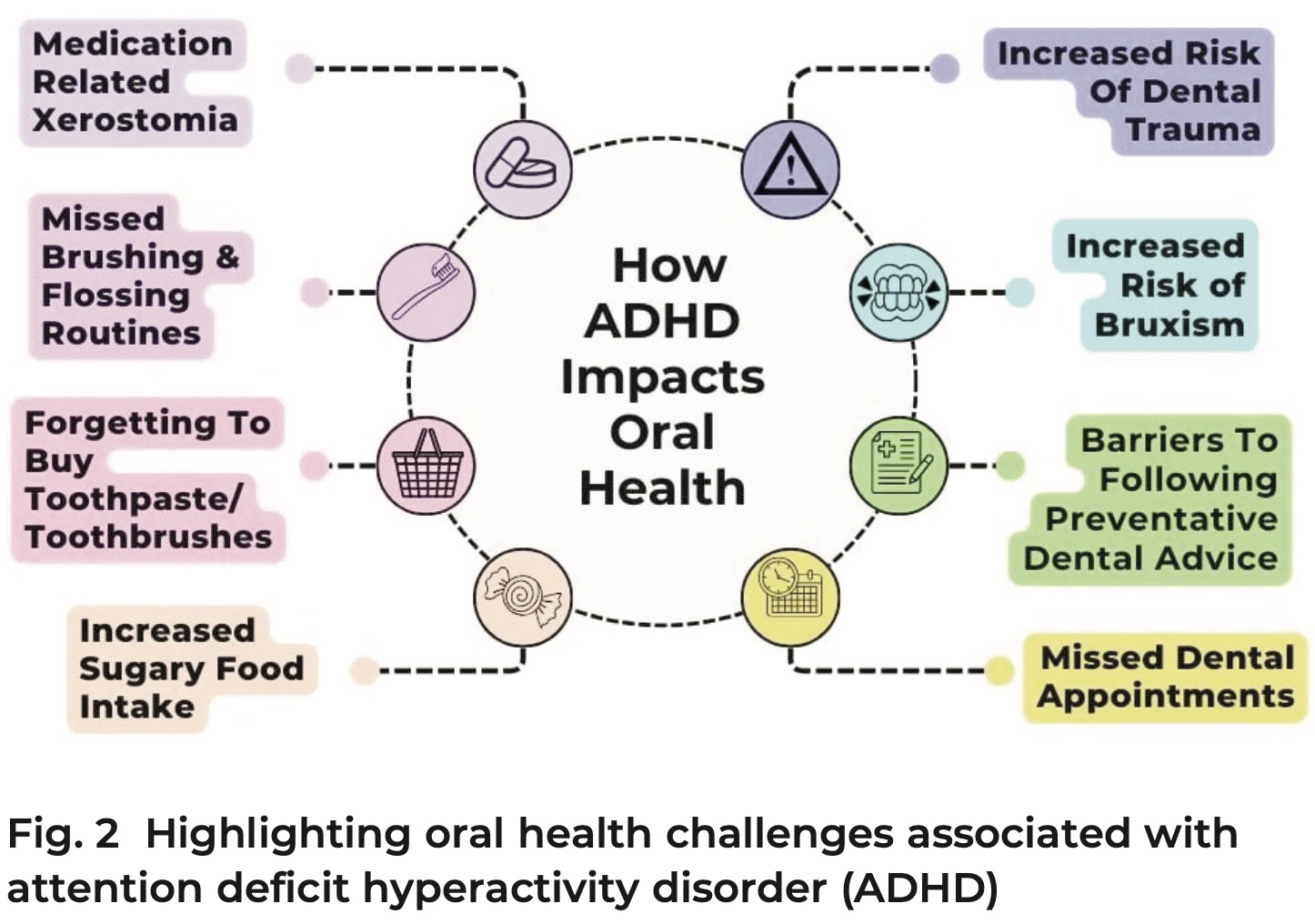
A growing body of evidence highlights the multiple ways in which ADHD can negatively impact oral health,5, 6 emphasising the need for increased awareness and tailored support from dental care professionals, (See Fig. 2).
Impact of ADHD on oral health and provision of dental care
Although the lived experience of each individual can vary significantly, oral health is one area that can be disproportionately affected in those with ADHD.7 This is often due to a combination of factors such as difficulty maintaining consistent and effective oral hygiene regimes, as well as ADHD medication-related effects such as xerostomia (dry mouth) which predispose patients to caries and periodontal disease.7 Research also shows those with ADHD are significantly more likely to experience anxiety disorders with up to 50% of individuals with ADHD also having a confirmed anxiety diagnosis- far exceeding rates seen in the general population.8 Heightened anxiety may result in amplified fear responses, especially in unfamiliar, intimidating clinical environments like the dental surgery.
The dental setting, already a source of apprehension for many, may be particularly overwhelming or distressing for individuals with ADHD. The many unfamiliar sights, sounds and sensory stimuli of the dental environment may heighten anxiety and understandably make it very difficult for some patients to sit still and follow instructions during treatment. As a result, patients with ADHD are often more likely to require sedation alongside behavioural management strategies to complement their dental care.9 This is especially pertinent for more prolonged or unpleasant procedures. Doing so helps maintain the comfort and safety of the patient and clinicians involved in their care10 However, it is important to note that this is not universally the case, and it is essential that each patient is treated as an individual, with sedation considered as part of a broader, personalised approach to their care.
Previous traumatic dental experiences or a strong fear of pain can significantly heighten dental anxiety in these patients. If a patient has previously undergone a distressing or painful dental procedure in the past, particularly without adequate preparation, support or pain control, they may develop lasting negative associations with dental care. This can lead to avoidance behaviours, increased emotional reactivity and a heightened physiological stress response during future visits.11 For individuals with ADHD, who may already struggle with emotional regulation and anticipatory anxiety, these experiences can amplify fear and make them even less likely to tolerate treatment without sedation or tailored behavioural interventions.11
Many individuals with ADHD have sensory sensitivities, making the dental environment difficult to tolerate. Bright lights, loud sounds, unfamiliar tastes, and the sensation of instruments and gloves in the mouth can quickly become overwhelming, especially for those with sensory processing difficulties, leading to distress, anxiety or non-co-operation.1
Impulsivity, distractibility and restlessness, common in ADHD, can make co-operation during dental treatment even more challenging.12 Sudden movements or interruptions may disrupt care or pose safety risks when sharp instruments are involved.
It therefore makes sense that in such cases, sedation may be beneficial for these patients to foster a calmer, more predictable environment, helping the patient remain still and relaxed whilst allowing the clinician to conduct the procedure safely and efficiently.
Potential issues combining ADHD with midazolam sedation
Midazolam plays a great role in UK dentistry as the most commonly used benzodiazepine for intravenous (IV) conscious sedation outside hospital.13 Midazolam works by enhancing the effect of gamma-aminobutyric acid (GABA) at the GABA-A receptor, producing sedative, anxiolytic and amnestic effects.14 Some evidence suggests that benzodiazepine receptor sensitivity may be altered in neurodivergent conditions, including ADHD, although direct human evidence in this arena is sparse.15
Several studies have suggested that individuals with ADHD may have dysregulated GABAergic function. Magnetic resonance spectroscopy studies have shown GABA concentrations being greatly reduced in areas of the brain associated with executive control, namely the prefrontal cortex and anterior cingulate cortex.16 These abnormalities may affect GABA-A receptor density or sensitivity, potentially leading to blunted or unpredictable responses to benzodiazepines like midazolam.16
ADHD is said to be characterised by hypoactivity of dopamine and noradrenaline in the prefrontal cortex, leading to deficits in attention, impulse control and emotional regulation.16 Though midazolam acts primarily via GABA-A receptors, dopaminergic modulation may indirectly influence behavioural responses to sedation. Medications used to manage ADHD such as the commonly prescribed drug, methylphenidate (Ritalin) work by increasing dopamine / noradrenaline which may counteract the sedative effect of drugs like midazolam.17
Key strategies in improving sedation in patients with ADHD
Considering the potential challenges of sedating patients with ADHD, some strategies are proposed and discussed to improve outcomes for this group of patients (see Table 1).
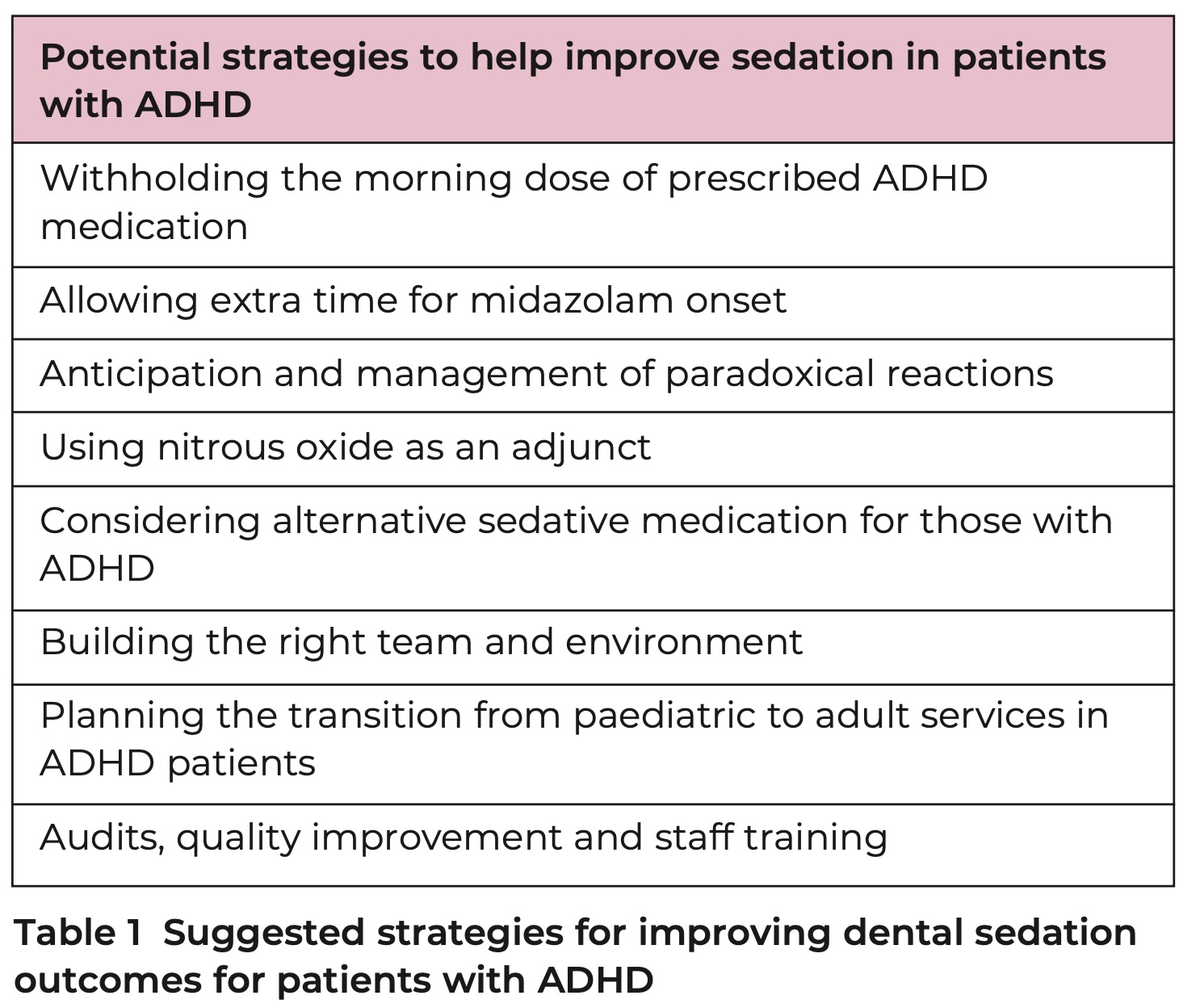
Withholding the morning dose of ADHD medication: Many patients with ADHD take regular prescribed stimulant medication such as methylphenidate (Ritalin) which can antagonise the sedative effects of drugs like midazolam. Case reports have previously documented this interaction leading to delayed or inadequate sedation.9 One study hypothesised this may be due to delayed absorption due to methylphenidate inhibiting liver enzymes responsible for drug metabolism.9 Some guidelines advise withholding the morning dose of ADHD stimulants on the day of a dental procedure involving midazolam sedation to prevent such interference.18 By pausing the stimulant (with the prescribing doctor’s prior approval) dentists may reduce the risk of the stimulant cancelling out the midazolam and avoid unexpectedly prolonged sedation or emergence issues. This adjustment in drug scheduling should be discussed carefully with the patient’s doctor and should be factored into pre-sedation planning.18
Allowing extra time for midazolam onset: Some studies indicate that children with ADHD may not require higher doses of midazolam for sedation, but that sedation can simply take longer to take effect and wear off. For example, an emergency department study using IV midazolam (with fentanyl) for fracture reductions found no difference in dose needed or sedation depth between ADHD and non-ADHD children, but that ADHD patients interestingly had significantly longer sedation and recovery room times.19 This suggests that midazolam remains an effective sedative for patients with ADHD; however, dentists should avoid administering extra doses too hastily and over sedating patients, as a slower onset of action may simply account for the delayed sedation.19 Sedation appointments could therefore be scheduled with a longer recovery period in mind, and the clinical team made aware of this.
Anticipation and management of paradoxical reactions: Although midazolam is normally anxiolytic in nature, a small number of patients (~1%) can exhibit paradoxical reactions which include increased agitation, hyperactivity or even aggression. Research has suggested ADHD patients may be at an increased risk of these paradoxical reactions. For instance, one case noted severe aggression in an ADHD patient after midazolam delivery, highlighting concerns around the potential suitability and safety of this drug in these patients.20 To improve safety, the dental team should be prepared to handle paradoxical reactions. Strategies could include maintaining a calm, low-stimulation environment, having a trained team ready, and as always, keeping the reversal agent, flumazenil, to hand if quick reversal is required.21 Another interesting area for consideration is the environment in which the treatment is taking place. Does the lighting, sounds and smell of the room create a calming environment or could they perhaps be improved for these patients?
The use of nitrous oxide as an adjunct: Inhalation sedation with nitrous oxide (‘laughing gas’) is minimally invasive and is said to often suffice for patients with mild ADHD symptoms.22 In fact, one review suggested that nitrous oxide alone is typically often enough to prevent unwanted behaviour in many ADHD dental patients.22 It reduces anxiety and provides some degree of sedation without the systemic effects of IV midazolam. Attempting nitrous oxide sedation first (if the patient can tolerate the nasal mask) is a reasonable strategy that could be employed. It may keep an ADHD patient sufficiently relaxed and co-operative, avoiding the need for IV sedatives. Even if IV midazolam is still needed for adequate sedation, combining it with nitrous oxide may be beneficial. This multi-modal approach may enable a lower dose of midazolam to be employed to achieve the desired sedation depth, potentially reducing unwanted side effects.22 This may be of particular use during IV cannulation in anxious or hyper- active patients by calming them prior to IV midazolam use.9
Consider alternative or other adjunct medications: If midazolam alone proves insufficient or problematic, exploring other sedative medications could perhaps be an area for research (in line with UK safety guidelines). International literature provides some intriguing alternatives. The use of low-dose Dexmedetomidine has been suggested as having potential use in dental sedation, due to its reduction in paradoxical effects.23 It is said to have the ‘properties of an ideal sedative’ including little effect on circulatory / respiratory function, sufficient amnesia, quick and easy control over sedation levels as well as rapid recovery post-sedation.23
A small trial found that trazodone (a sedative antidepressant) given orally was ‘more effective than midazolam at keeping children with ADHD calmly sedated for radiological imaging’.20 Although trazodone sedation is not routine in UK dentistry, this evidence suggests its potential use as an oral pre-medication in particular cases. Similarly, sedative antihistamines or opioid combinations have been used historically elsewhere for challenging paediatric dental patients. However, UK dental pharmacological management relies on evidence-based practice via National Institute for Health and Care Excellence (NICE) guidelines. These aim to improve quality and efficacy of care without the need for multi-drug regimens unless the benefit outweighs the risk.24
In summary, a patient who reacts poorly to midazolam may potentially benefit from another agent or a low-dose adjunct. When used by experienced clinicians with careful monitoring, they may provide valuable alternatives to simply increasing the dose of midazolam. Emerging sedative drugs like remimazolam (a newer, short-acting benzodiazepine) may also play a common role in the future to provide smoother, more easily reversible sedation.22
Growing the correct team and creating the right environment: According to UK guidance, managing children or adults with special needs (which includes ADHD) under sedation should be done by clinicians with appropriate training and in facilities equipped for their care.25 The Scottish Dental Clinical Effectiveness Programme recommends that providers adapt their standard protocols for patients with special care requirements and document any deviations.25 Making small practical changes to the appointment itself can greatly benefit sedated ADHD patients. These individuals often have difficulty with waiting and may be sensitive to overstimulation. The environment of the waiting area is therefore critical, and appointments should be scheduled at a time of day that works best for the patient. Limiting waiting times and allowing the patient to remain outside and be called in to the practice when the dentist is ready may also be a good suggestion. Research suggests that the treatment setting can greatly influence sedation success, and a quiet, low-distraction treatment room may help maintain the sedative effect.9 For example, dimmed lights and limiting extra noises is noted to aid in preventing triggering an ADHD patient,9 as is keeping the dental procedure as quick and efficient as safely practicable. Sedation time should be kept within the necessary length to avoid restlessness as the drug level wanes. If extensive dentistry is required, consideration should be given to staging treatment into multiple shorter visits rather than one very long session under sedation. Continuous communication and behavioural techniques should also be implemented. Using sedation as an adjunct, not substitute to effective communication and behaviour management is key.9
Planning the transition from paediatric to adult services in ADHD patients: The transition from paediatric to adult services represents a critical period for patients with ADHD, where continuity of care can often be disrupted. Proactive liaison with Child and Adolescent Mental Health Services (CAMHS) and wider multidisciplinary teams can help support this transition, ensuring that sedation approaches remain consistent, safe, and that they evolve to adapt to the patients’ needs as they mature. Embedding this multidisciplinary collaboration within dental care pathways may not only improve sedation outcomes but also reduce treatment avoidance and anxiety across the patient’s lifespan.
Audits, quality improvement and staff training: Finally, dental practices should treat the sedation of ADHD patients as an area for ongoing learning and improvement. Given the paucity of research regarding ADHD and sedation in the literature, it would be prudent to collect feedback and data on each sedation visit involving a patient with ADHD.9 Tracking outcomes is key. Was the sedation level adequate? Were there any behavioural issues or recorded adverse events? How long did recovery take? Answering these questions may help to refine protocols over time. Aggregating these observations through creation of a nationwide database may reveal patterns and trends (for instance, particular ages or ADHD medication statuses that correlate with easier or harder sedations). This may enable better patient case selection and pre-sedation planning.
Clinicians should also be encouraged to stay updated on newly emerging evidence. For example, if new UK guidelines or studies are published on sedation in neurodiverse patients, the dental team should integrate these recommendations into their practice. By fostering a culture of continuous professional development and education, dentists will be better prepared to adapt as research fills the current knowledge gaps.
Current gaps in knowledge / research surrounding ADHD and dental sedation
Despite ADHD being very common, there is a notable lack of high-quality, controlled studies on IV sedation outcomes in dental patients with ADHD. Much of our guidance comes from small case series, surveys, or extrapolation from general paediatric sedation research.9
UK-based peer-reviewed literature specifically addressing ADHD and dental sedation is sparse. Most sedation regulations discuss broad categories of special care patients without detailing ADHD-specific guidelines and the need for more research is clear. For example, a 2021 analysis concluded that ‘the suitability of midazolam sedation in patients with ADHD is yet to be verified in robust studies’.20
We can, however, draw some insights from sedation research in other medical domains. As mentioned previously, emergency departments have studied sedation in children with ADHD. The finding that sedation depth and dosing were comparable to controls, but recovery took longer,19 suggests that dentists should perhaps not reflexively administer more drug to an ADHD patient; often the standard dosing is effective, and the difference lies in sedative pharmacodynamics and perhaps ADHD patients just metabolize or respond to sedatives at a different rate when compared to neurotypical peers.19 This emphasises the importance of patience and continuous observation during sedation.
Some key questions that remain unanswered include: Do ADHD patients truly have a higher incidence of paradoxical reactions, or is it anecdotal? Is there an optimal sedation drug or combination of drugs for this group? How does long-term use of medication like methylphenidate affect sedation? Is midazolam the best drug of choice for these patients’ requiring sedation for dental treatment? Finally, could the clinical environment and the staff delivering sedation be as influential as the pharmacological agent itself in determining patient outcomes? Future high-quality research is therefore needed to develop evidence-based protocols tailored to ADHD management in dental practice.
Conclusion
In conclusion, ADHD can have a substantial impact on oral health and pose distinct challenges in the provision of dental care. Sedation, particularly intravenous sedation with midazolam, can be a valuable tool in supporting both the patient and the clinician during treatment. However, it is important to recognise that responses to sedation in patients with ADHD may be atypical, requiring greater awareness, flexibility and clinical judgement.
The emphasis for dental professionals must therefore as always be on personalised, patient-centred care. A clear understanding of ADHD, alongside knowledge of potential medication interactions and behavioural presentations, is vital. Creating a kind, supportive and inclusive environment can empower neurodivergent patients to take ownership of their oral health and reduce the likelihood of treatment need or avoidance and anxiety-driven non-attendance. Dental professionals should aim to equip patients with practical tools and tailored strategies to make dental care more manageable and accessible in everyday life. Regular recalls for this patient group may also aid in desensitisation which may help if / when the time for more invasive treatment arrives.
Further research is needed to establish evidence-based best practices for dental sedation in neurodivergent populations, and to better understand how their care needs may differ from those of neurotypical patients. Above all, it is essential to keep the patient at the centre of every decision. This can be achieved by funding PPI (Patient and Public Involvement) whereby the ADHD community can directly improve the relevance, quality and impact of research into improving their oral health outcomes.26
People do not fit into neat boxes, and care should never be one-size-fits-all. Empathy, effective communication and active listening are always critical. However, they are especially so, when working with individuals who may have spent a lifetime feeling misunderstood, dismissed or unfairly treated by institutions and healthcare providers.
While much of the discussion has focused on the challenges, it is equally important to acknowledge and celebrate the strengths that often accompany ADHD. Many individuals with ADHD are creative, spontaneous, energetic, imaginative and resilient, with a unique ability to view the world through a different lens. These qualities are often the spark for innovation and new ideas. As dental professionals, we can be inspired by this perspective, challenging the status quo, rethinking traditional approaches and evoking meaningful change in how we care for, and connect with, our neurodiverse patients, now and into the future.
References
- ADHD UK. What is ADHD - about ADHD. 2024. Online information available at: https://adhduk.co.uk/about-adhd/ (accessed MARCH 2025).
- McKechnie D G, O’Nions E, Dunsmuir S, Petersen I. Attention-deficit hyperactivity disorder diagnoses and prescriptions in UK primary care, 2000– 2018: Population-based Cohort Study. BJPsych Open. 2023;9:1–9. Online information available at: https://pubmed.ncbi.nlm.nih.gov/37455585/ (accessed MARCH 2025). doi:10.1192/bjo.2023.512.
- Blum K, Chen A L-C, Braverman E R et al. Attention-deficit hyperactivity disorder and reward deficiency syndrome. In: Evidence-Based Interventions for Students with Learning and Behavioural Challenges. 2008. p. 897–914. Online information available at: https://pmc.ncbi.nlm.nih.gov/articles/PMC2626918/ (accessed MARCH 2025). doi:10.2147/ndt.s2627.
- Kessi M, Duan H, Xiong J et al. Attention-deficit/hyperactive disorder updates. Front Mol Neurosci. 2022; 15:49–74. Online information available at: https://www.frontiersin.org/journals/molecular-neuroscience/articles/10.3389/fnmol.2022.925049/full (Accessed MARCH 2025). doi.org/10.3389/fnmol.2022.925049.
- Begnini G J, Brancher J A, Guimarães A T B, et al. Oral Health of Children and Adolescents with Attention Deficit Hyperactivity Disorder. Int J Clin Pediatr Dent. 2019;12:543–7. Online information available at: https://pubmed.ncbi.nlm.nih.gov/32440072/ (Accessed MARCH 2025). doi:10.5005/jp-journals-10005-1691.
- Reddy E R, Kiranmayi M, Mudusu S P, Raju S S, Jannapureddy R, Kumar A. Oral Health Status and Caries Experience in Children Diagnosed with Attention- deficit Hyperactive Disorder. Int J Clin Pediatr Dent. 2022;15:438–41. Online information available at: https://pubmed.ncbi.nlm.nih.gov/36875981/ (Accessed MARCH 2025). doi:10.5005.
- Chau Y C Y, Peng S M, McGrath C P J, Yiu C K Y. Oral health of children with attention deficit hyperactivity disorder: systematic review and meta-analysis. J Atten Disord. 2020;24:947–962. Online information available at: https://pubmed.ncbi.nlm.nih.gov/29182035/ (Accessed MARCH 2025). doi:10.1177/1087054717743331.
- Van der Meer D, Hoekstra P J, van Rooij D, Winkler A M, van Ewijk H, Heslenfeld D J, et al. Anxiety modulates the relation between attention-deficit/hyperactivity disorder severity and working memory-related brain activity. World J Biol Psychiatry. 2018;19:450–60. Online information available at: https://pubmed.ncbi.nlm.nih.gov/28635543/ (Accessed MARCH 2025). doi:10.1080/15622975.2017.1287952.
- Kerins C A, McWhorter A G, Seale N S. Pharmacologic behaviour management of paediatric dental patients diagnosed with attention deficit disorder/attention deficit hyperactivity disorder. Pediatr Dent. 2007;29:507–13. Online information available at: https://pubmed.ncbi.nlm.nih.gov/18254422/ (Accessed MARCH 2025).
- Ashley P F, Chaudhary M, Lourenço-Matharu L. Sedation of children undergoing dental treatment. Cochrane Database Syst Rev. 2018;12, Online information available at: https://pubmed.ncbi.nlm.nih.gov/30566228/ (Accessed MARCH 2025). doi:10.1002/14651858.CD003877.pub5.
- Humphris G, King K. The prevalence of dental anxiety across previous distressing experiences. J Anxiety Disord. 2011;25:232–6. Online information available at: https://pubmed.ncbi.nlm.nih.gov/20952156/ (Accessed MARCH 2025). doi:10.1016/j.janxdis.2010.09.007.
- University of Washington, School of Dentistry. Oral health fact sheet for dental professionals: Attention Deficit Hyperactivity Disorder (ADHD) and dental treatment [Internet]. Seattle (WA): University of Washington. Online information available at: https://dental.washington.edu/wp-content/media/sp_need_pdfs/ADHD-Dental.pdf (Accessed MARCH 2025).
- Oxford Health NHS Foundation Trust. Intravenous sedation information leaflet. Oxford: Oxford Community Dental Service; 2020. Online information available at: https://www.oxfordhealth.nhs.uk/wp-content/uploads/2020/03/OH-046.19-IV-sedation-dental-info-leaflet.pdf (Accessed MARCH 2025).
- Bean T, Aruede G. Conscious Sedation in Dentistry. 2023 Apr 23 [updated]; In: StatPearls [Internet]. Treasure Island (FL): StatPearls Publishing; 2025 Jan. Online information available at: https://www.ncbi.nlm.nih.gov/books/NBK592406/ (Accessed MARCH 2025).
- Davico C, Sec-ci I, Vendrametto V, Vitiello B. Pharmacological treatments in autism spectrum disorder: a narrative review. J Psychopathol. 2023;29:38–52. Online information available at: https://www.jpsychopathol.it/article/view/251 (Accessed MARCH 2025). doi:10.36148/2284-0249-N251.
- Puts N A, Ryan M, Oeltzschner G, Horska A, Edden R A E, Mahone E M. Reduced striatal GABA in unmedicated children with ADHD at 7T. Psychiatry Res Neuroimaging. 2020;301:111082. Online information available at: https://pubmed.ncbi.nlm.nih.gov/32438277/ (Accessed MARCH 2025). doi:10.1016/j.pscychresns.2020.111082.
- Edden R A, Crocetti D, Zhu H, Gilbert D L, Mostofsky S H. Reduced GABA concentration in attention-deficit/hyperactivity disorder. Arch Gen Psychiatry. 2012;69:750–3. Online information available at: https://pubmed.ncbi.nlm.nih.gov/22752239/ (Accessed MARCH 2025). doi:10.1001/archgenpsychiatry.2011.2280.
- UK Clinical Pharmacy Assoc. Handbook of Perioperative Medicines – Methylphenidate. 2021. Online information available at: https://periop-handbook.ukclinicalpharmacy.org/drug/methylphenidate/ (Accessed MARCH 2025).
- Schmerler B L, Cohen D M, Leder M S, Bonsu B K. Procedural sedation for fracture reduction in children with hyperactivity (ADHD). Am J Emerg Med. 2008;26:661–4. Online information available at: https://pubmed.ncbi.nlm.nih.gov/18606317/ (Accessed MARCH 2025). doi: 10.1016/j.ajem.2007.10.001.
- Chi S I, Kim H, Seo K S. Analysis of application of dental sedation in attention deficit hyperactivity disorder (ADHD) patients using the Korean National Health Insurance data. J Dent Anesth Pain Med. 2021;21:99–111. Online information available at: https://pubmed.ncbi.nlm.nih.gov/33880403/ (Accessed MARCH 2025). doi:10.17245/jdapm.2021.21.2.99.
- Weinbroum A A, Szold O, Ogorek D, Flaishon R.The midazolam-induced paradox phenomenon is reversible by flumazenil. Epidemiology, patient characteristics and review of the literature. Eur J Anaesthesiol. 2001;18:789–97 Online information available at: https://pubmed.ncbi.nlm.nih.gov/11737177/ (Accessed MARCH 2025). doi:10.1046/j.1365-2346.2001.00922.x.
- Yang R, Zhao R, Chaudry F, Wang T, Brunton P, Khurshid Z, Ratnayake J. Modern sedative agents and techniques used in dentistry for patients with special needs: A review. J Taibah Univ Med Sci. 2023;19:153–63. Online information available at: https://pubmed.ncbi.nlm.nih.gov/38047240/ (Accessed MARCH 2025). doi:10.1016/j.jtumed.2023.10.004
- Ogawa S, Seino H, Ito H, Yamazaki S, Ganzberg S, Kawaai H. Intravenous sedation with low-dose dexmedetomidine: its potential for use in dentistry. Anesth Prog. 2008;55:82–8. Online information available at: https://pmc.ncbi.nlm.nih.gov/articles/PMC2533640/ (Accessed MARCH 2025). doi:10.2344/0003-3006-55.3.82.
- National Institute for Health and Care Excellence (NICE). Medicines optimisation: the safe and effective use of medicines to enable the best possible outcomes [Internet]. London: NICE; 2015 (NICE guideline NG5). Online information available at: https://www.nice.org.uk/guidance/ng5/resources/medicines-optimisation-the-safe-and-effective-use-of-medicines-to-enable-the-best-possible-outcomes-pdf-51041805253 (Accessed MARCH 2025).
- Scottish Dental Clinical Effectiveness Programme. Conscious Sedation in Dentistry: Dental Clinical Guidance. 3rd ed. Dundee: SDCEP; 2022. Online information available at: https://www.sdcep.org.uk/media/iota3oqm/sdcep-conscious-sedation-guidance-unchanged-2022.pdf (Accessed MARCH 2025).
- NHS Health Research Authority. [Internet]. Online information available at: https://www.hra.nhs.uk/planning-and-improving-research/best-practice/public-involvement/ (Accessed MARCH 2025).